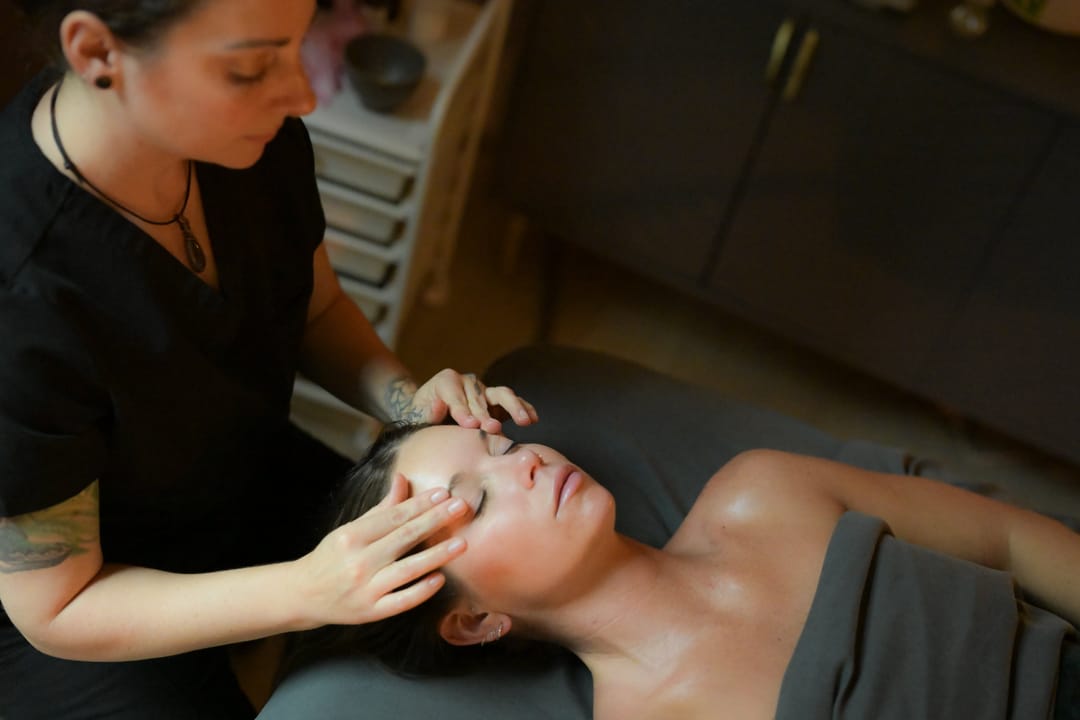
Lymphatic drainage massage is very light, slow, rhythmic pressure that moves in the direction of your lymph nodes. It is nothing like deep tissue. If you’re expecting kneading, you’ll be surprised by how gentle it is, and that gentleness is the point.
The short version
I use my hands to stretch the skin in slow circles and pumping strokes, starting at the neck and collarbone and working outward. The pressure is lighter than most people have ever had in a massage. It’s meant to move fluid, not muscle.
People book it after surgery once their surgeon says yes, during pregnancy for swelling, or when they feel puffy and heavy after travel or a long sedentary stretch. Most describe feeling lighter afterward, and a lot of them need the bathroom on the way out.
What the lymph system does
Your lymphatic system is a network of thin vessels and small nodes that runs alongside your blood vessels. It collects the fluid that leaks out of your capillaries into the tissue, filters it through the nodes, and returns it to your bloodstream near the collarbones. It also carries white blood cells, which is why the nodes swell when you’re fighting something off (Cleveland Clinic).
Unlike your blood, lymph has no pump. It moves when you move, when you breathe deeply, and when the skin over the vessels gets gently stretched. That last part is what a lymphatic session does. You’ll hear the word “detox” attached to this work a lot. I don’t use it. Your liver and kidneys handle that job. What I can do is help fluid move along the path it already takes.
What a session feels like
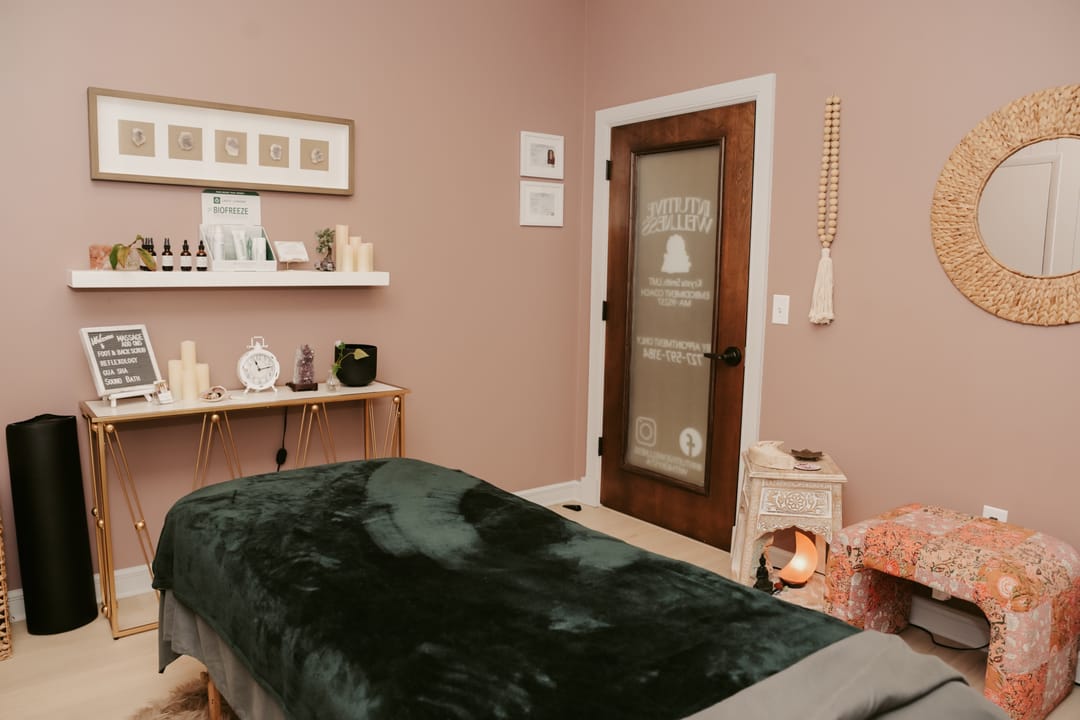
You lie on a warm table under a sheet, and I work skin over skin with little or no oil so I can get traction. The strokes are slow, repetitive, and always pointed toward the nearest group of nodes: the neck, the armpits, the groin, the backs of the knees. Direction matters more than force, so I spend the first few minutes clearing the collarbone area before I touch anywhere else.
Most clients get drowsy within ten minutes. Some fall asleep. The room stays warm because cold makes tissue tighten, and I keep the lights low. When we’re done, I’ll ask you to stand up slowly, drink some water, and use the bathroom before you drive. That last part isn’t a suggestion.
30, 60 or 90 minutes
The 30-minute session covers half the body. Upper means face, neck, arms, and chest. Lower means belly, hips, and legs. Pick this if you have one area that swells and you don’t need the rest.
Sixty minutes is the full body at an even pace. Ninety minutes gives me room to do the face and body together, or to work carefully around incisions after surgery without rushing anything. All three lengths and the packs are listed on the Lymphatic Drainage Massage page, and the current rates are on Pricing.
After surgery
Post-op clients are a big part of my lymphatic bookings, mostly after cosmetic or orthopedic procedures. The rule is simple: I only work on you once your surgeon has cleared you for manual lymphatic drainage. Not before, and not because a friend said it was fine at day three.
Bring any written instructions with you. Some surgeons want compression garments left on, some want certain areas skipped, and some want specific stroke directions. I follow their notes. If you have incisions that haven’t closed, a fever, or any sign of infection, we wait.
One honest boundary: I don’t treat lymphedema. That’s a medical condition managed by a certified lymphedema therapist, usually in a clinical setting with bandaging and measurement. If you’ve been diagnosed with it, ask your provider for a referral to one. What I offer is general lymphatic drainage for swelling and recovery, and it sits alongside your medical care, not in place of it.
This article is not medical advice. Talk to your surgeon or provider before booking any bodywork after a procedure.
During pregnancy
Swollen feet, ankles, and hands show up for a lot of people in the third trimester. The Prenatal Lymphatic Drainage tier is a 60-minute, very light session focused on moving that fluid, done side-lying with the pregnancy pillow. It’s listed with the other tiers on the Prenatal Massage page.
As with any prenatal bodywork, get your provider’s okay first, and tell me if your pregnancy is high-risk. If you have sudden swelling in your face or hands, or a headache that won’t quit, call your provider before you call me. Those need a doctor, not a massage.
What it pairs with
The face responds well to this work, which is why lymphatic drainage is built into NeoLifting® facial and buccal massage. If puffiness around the eyes and jaw is what bothers you, that session does the lymphatic pass and then goes deeper into the muscles.
Because a lymphatic session leaves you quiet and a little floaty, many clients add time in the suite next door at Stillness & Aesthetics Co.. The two they choose most are the Purification Ritual, which is the dry salt room, and the Radiance Reset, a short stretch under near-infrared light. Some do it before to warm up, some after to stay in the calm. Either order works.
Questions people ask
How soon after surgery can I book?
That is your surgeon’s call, not mine. Most clients come once their provider clears them for gentle manual work, which varies by procedure. Bring any written instructions so I can follow them.
Will I feel it working?
Usually not during. People describe feeling lighter, less puffy, or needing to pee afterward. Some feel tired the same day, so keep the evening quiet.
Is lymphatic drainage the same as a detox?
I don’t use that word. Your liver and kidneys handle that. What this does is support fluid movement, which is why it’s used around surgery and swelling.
This is general information, not medical advice. Check with your provider about your own situation.