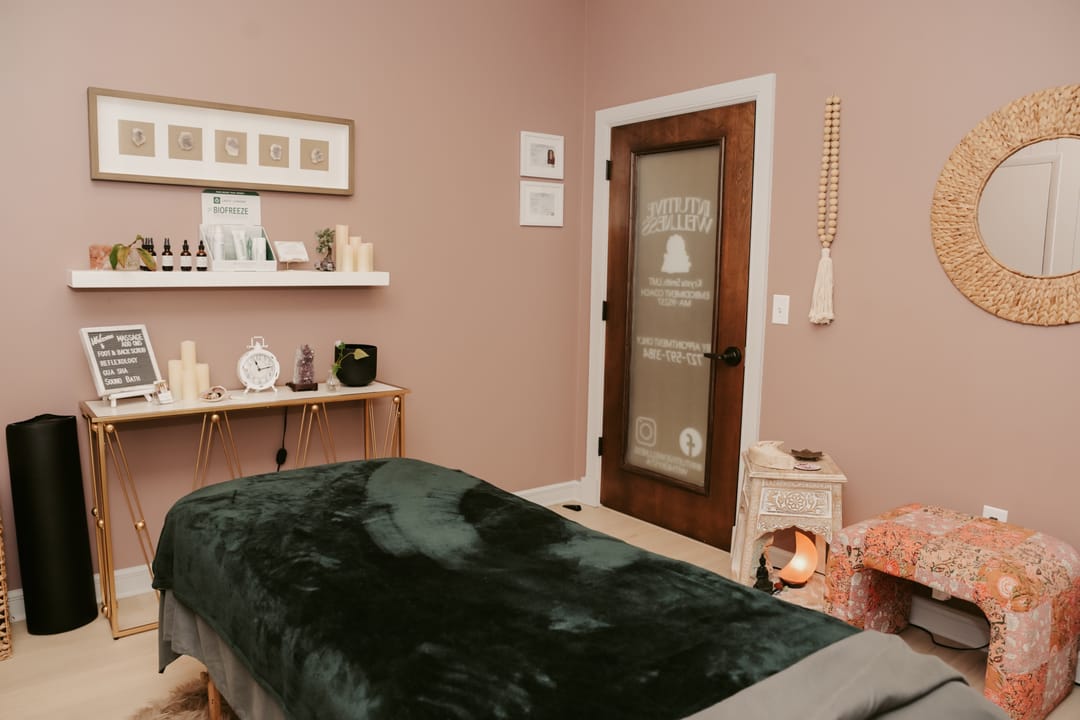
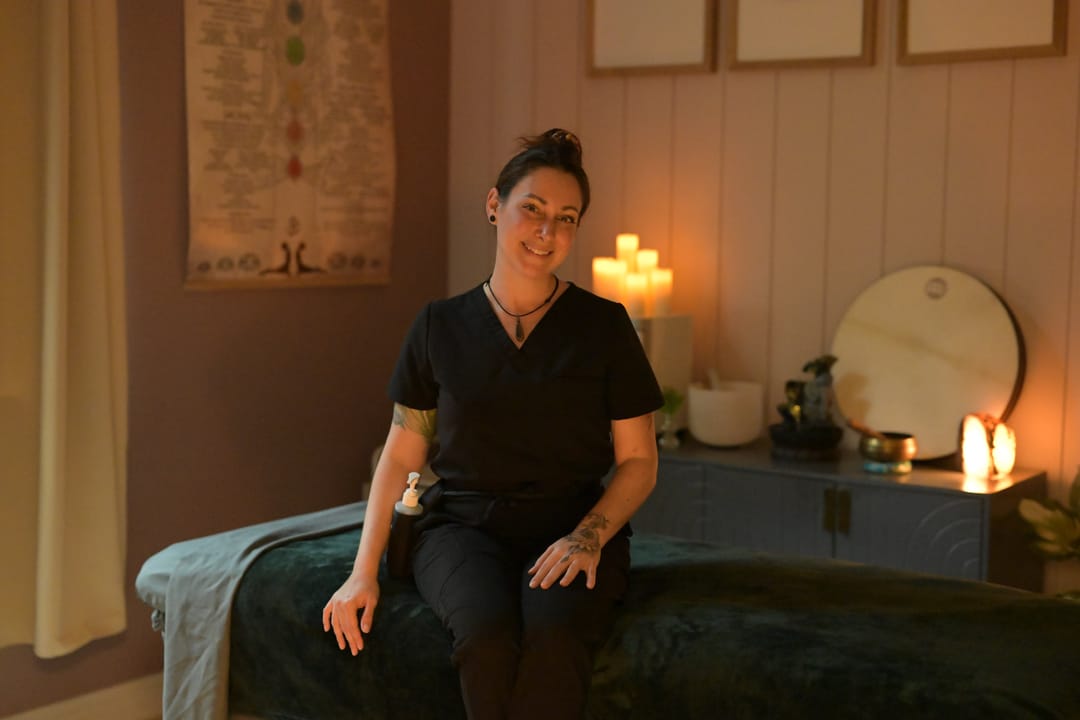
A first massage appointment with me runs like this: we talk for about five minutes, you undress to whatever level feels right, and you lie under a sheet on a warm table. I only work on what we agreed to in that talk. The rest of this article fills in the details so nothing on the day is a surprise.
The short version
You stay in charge the whole time. You pick the pressure, you decide what comes off and what stays on, and you can change your mind halfway through. I keep you draped with a sheet and uncover only the part I’m working on.
I’ve been a licensed massage therapist in Florida since 2019, and the rules I work under are public if you want to read them (Florida Board of Massage Therapy). Draping and consent aren’t extras I offer. They’re the baseline.
Before you arrive
Booking happens online, and a deposit holds your spot. If you need to move the appointment, 48 hours’ notice moves it once without losing the deposit. Session lengths and what each one costs are on the pricing page, so you can compare before you commit.
If you’re not sure which session to pick, book the free Clarity Call first. It’s a short phone chat where you tell me what’s going on and I tell you what I’d book. No pressure to book anything after.
On the day, a few small things help:
- Arrive about five minutes early. That gives us time for the intake without cutting into your table time.
- Eat lightly. A full stomach and face-down pressure aren’t a good pair.
- Skip heavy lotion or body oil that morning. It makes the work slippery and I can’t feel the tissue as well.
- Drink some water on the way over.
The first ten minutes
You’ll fill in a short intake form, then we talk. I ask where it hurts, how long it’s been there, and what kind of pressure you like. If you don’t know what pressure you like, that’s fine. Most first-timers don’t, and we find it on the table.
I also ask about sleep and stress. That surprises some people, but it matters. A body that hasn’t slept well guards differently, and a stressed nervous system doesn’t let go just because I press harder. Those two answers change how I start the session more than anything else you tell me.
Tell me about recent surgery, injuries, medications like blood thinners, and pregnancy. None of those rule out a massage on their own, but they change what I do.
On the table
I leave the room while you undress and get under the sheet. When I come back, I check the room temperature and the table warmer, and I’ll ask about scent before I choose an aromatherapy oil. Heated towels go on first to warm the tissue.
Draping means you stay covered by the sheet, and I fold back only the area I’m working on: one leg, your back, an arm. Nothing else gets uncovered. The research on massage is clearest for short-term relief of pain and stress (NCCIH), and none of that depends on how much you take off.
I’ll say “tell me if the pressure is wrong” at the start, and I mean it literally. Too much, too little, a spot that feels sharp instead of sore. Say it out loud, in the moment. I’d much rather adjust than have you brace for an hour.
If you booked Intuitive Massage
Intuitive Massage has no set routine. I read what your body is holding and blend Swedish strokes, deeper pressure, stretching, and some quiet holds. The intake for this one goes a little further into what’s going on in your life, because that’s part of what I’m working with. It’s a good first booking if you can’t name the problem but know you need something.
If you booked Therapeutic or Deep Tissue
Therapeutic Massage is a full-body session with moderate to deep pressure and extra time on one focus area. If you’d rather I skip your face and feet and spend that time on your back, say so at intake.
Chronic Tension Relief is my deep tissue session. Most of the time goes to the one or two spots that won’t let go, with slow, sustained pressure. Deep means firm and specific, not painful. You should never be holding your breath.
What happens after
I’ll leave the room so you can get dressed. Sit up slowly and swing your legs off the table before you stand. People sometimes feel a little floaty, and that’s normal.
Drink water that afternoon and keep the evening easy. After deeper work, some people feel tender the next day, close to the feeling after a good workout. Gentle movement and heat help. Massage therapists see this often enough that it’s a standard part of aftercare advice (AMTA).
When to rebook depends on why you came. For a stubborn tension pattern, every two to three weeks at first is common. For general upkeep, once a month works for a lot of clients. I’ll give you my honest read before you leave, and you can decide.
The building and the studio
My studio is at 4109 Little Rd, Suite 102, in New Port Richey. It’s a shared suite with Stillness & Aesthetics Co., so you’ll walk through a calm shared space to reach my room. Parking is right out front.
Sharing the suite means you can add a Stillness ritual before or after your massage: the salt sauna, near-infrared light, or the Sound Lounge. Some clients do it before to settle in; others do it after to stay in the quiet a little longer. Add it when you book, or ask me on the day and we’ll see what fits.
Questions people ask
Do I have to be fully undressed?
No. Undress to whatever feels right. You are under a sheet the whole time and I only uncover the area I’m working on. Some people keep everything on and we adapt.
Will I be sore afterwards?
After deeper work, some people feel tender for a day, a bit like after a workout. Drink water, move gently, and tell me next time so we can adjust.
Can I talk during the massage?
Yes, or not. Some people chat, some fall asleep. I’ll follow your lead and only check in about pressure.