The short version
Prenatal massage is regular massage adapted for a pregnant body: side-lying or a pillow with a belly cut-out, lighter pressure in a few places, and certain areas left alone. The second trimester is when most people start, and the third is when hips, swelling and sleep take over the session. Ask your provider before you book, every time, and I’ll take it from there.
That is the whole rule set in one paragraph. The rest of this is what changes as the months go by, what I avoid and why, and how the clothed Thai version differs from the table.
First trimester
Many providers prefer you wait until the second trimester before booking bodywork, and I follow their lead. The first twelve weeks are when the body is doing the most behind the scenes, and nausea and exhaustion make lying still on a table less appealing anyway.
If your provider clears you early, I keep it simple. Light to moderate pressure on the back, shoulders, neck and legs, nothing on the belly, and you positioned however feels least queasy. Many first-trimester clients tell me the neck and shoulder work is the part they came for, so that gets the time.
Tell me at booking that you’re in the first trimester. It changes the setup, and I’d rather know before you arrive than after.
Second trimester
Weeks 14 to 27 are usually the sweet spot. Energy comes back, the belly is showing but not yet in the way, and the low back and hips start asking for attention. ACOG notes that back pain is common in pregnancy as the ligaments loosen and your centre of gravity shifts forward. This is the stretch where a prenatal massage session does the most obvious good.
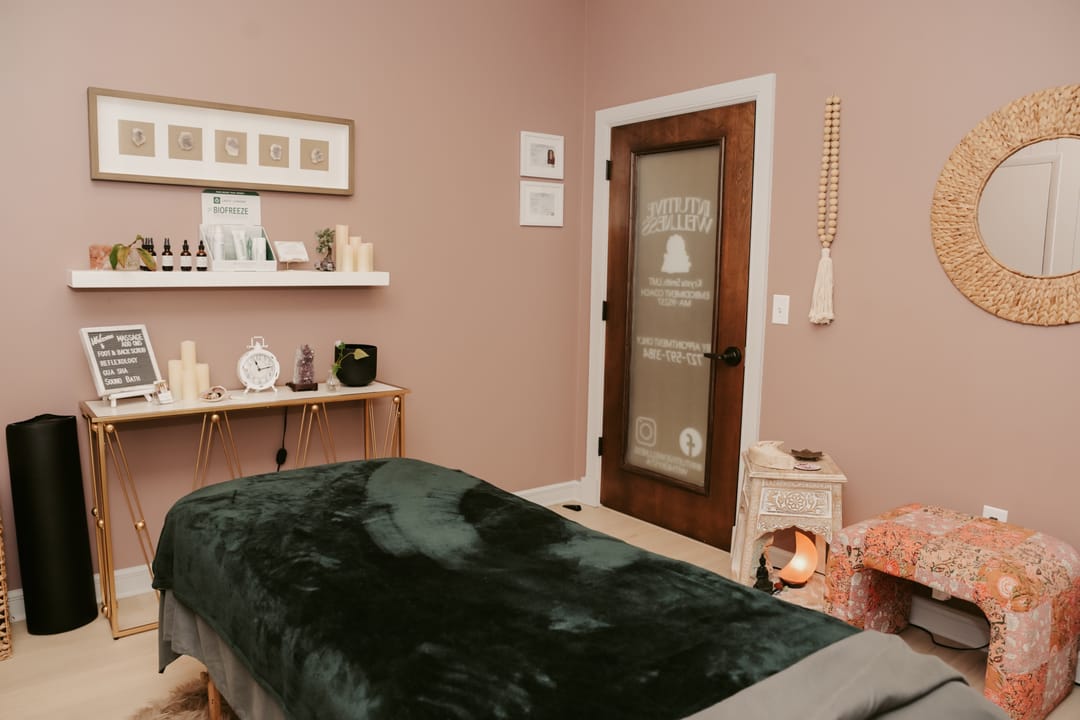
You have two ways to lie. The pregnancy pillow has a cut-out for your belly and a well for your chest, so you can go face-down with nothing pressing on the baby. Or you lie on your side with bolsters between your knees and under your arm. Most people try the pillow once and pick a favourite. Both work, and we can switch halfway.
The work itself is slow. I spend time on the low back, the glutes and the outer hip, where the sciatic-type ache tends to live. Hot towels go on the back before I start. Pressure sits at gentle to moderate, and you set it.
Third trimester
From week 28, the session changes shape. The belly is bigger, sleep gets harder, and feet and ankles start to swell by evening. Side-lying becomes the default position, with the pillow propping you at an angle if you want a few minutes on your back.
Three things get most of the time. Hips, because the joints are loosening for birth and the muscles around them work overtime. Sleep, which means slow, rhythmic work and a quiet room rather than anything stimulating. And swelling in the lower legs.
For swelling, there’s a Prenatal Lymphatic tier. It uses the same very light, skin-level strokes as my lymphatic drainage sessions, aimed at moving fluid out of the legs and feet. It feels like almost nothing while it’s happening. Clients tell me their shoes fit better that evening, which is the honest measure.
What I avoid and why
Some of this is standard practice and some is me being careful. Either way, here is what stays off the menu during pregnancy.
- Deep pressure on the calves. Pregnancy raises the chance of blood clots, and I won’t press hard into the lower leg. Long, light strokes only.
- Deep abdominal work. I don’t knead the belly at any stage. Light hands resting there, if you want it, is the most I’ll do.
- Certain acupressure points on the ankle, hand and low back that tradition links to labour. The evidence is thin, but the cost of skipping them is zero, so I skip them.
- Heat kept mild. Warm towels, yes. Nothing that raises your core temperature.
- Strong essential oils. Scent is lighter and I’ll go unscented if you ask.
If you have a high-risk pregnancy, high blood pressure, or a history of clots, talk to your provider and bring their notes. The ACOG guidance on massage in pregnancy says much the same: generally fine for a low-risk pregnancy, check first if it isn’t.
Prenatal Thai massage
Some people don’t want to lie on a table for an hour, or the pillow just isn’t working for them that week. For them there’s Prenatal Thai Massage, a 60-minute clothed session on a padded mat.
You wear something stretchy. I use palm and thumb compression along the legs, hips, back and arms, then gentle hip and shoulder openers, all from side-lying or supported seated positions. No face-down, no lying flat on your back, no deep stretches. It ends with a few minutes of singing bowls or drum so you settle before you get up.
Pick Thai if you feel stiff and want to move. Pick the table if you want to lie still and be kneaded. Plenty of clients alternate, depending on the week.
Booking notes
Prenatal Massage comes in 60, 75 and 90 minutes, plus the Prenatal Lymphatic tier. Prenatal Thai is one 60-minute session. Current rates are on the pricing page.
The pillow and bolsters are here; you bring nothing but yourself. Eat a snack beforehand, use the bathroom right before, and plan to get up slowly at the end. If your pregnancy is high-risk or you’re in the first trimester, bring your provider’s note or have them message me. Regular prenatal care is the thing that keeps you and the baby safe (NICHD); I’m an addition to it, not a substitute.
Questions people ask
Is massage safe during pregnancy?
For most low-risk pregnancies, with your provider’s okay, yes. I adapt position, pressure and areas worked. If you have a high-risk pregnancy, ask your provider what they’re comfortable with before booking.
What is Prenatal Lymphatic Drainage?
A very light session focused on moving fluid, mostly for third-trimester swelling in the legs and feet. It is not a deep massage. If you’re hoping for pressure on your hips, book standard Prenatal Massage instead.
Can I lie on my back?
Briefly and propped up, depending on how far along you are. Most of the session is side-lying with the pillow. If you feel dizzy or short of breath at any point, say so and we change position straight away.
This is general information, not medical advice. Check with your provider about your own situation.

