The short version
Embodiment coaching is one-on-one work that starts with your body instead of your story. In a 60-minute session I use slow breathing, simple somatic practices and functional movement to help you notice what your body is doing and change it. It’s for people who feel stuck in their head, and it is not therapy.
Most coaching starts with talking and stays there. This starts with about ten minutes of talking, then moves to breathing, then to moving. The thinking comes last, once the body has settled enough to think clearly. People tend to leave tired in a good way, with one small thing to practise.
What “somatic” means here
“Somatic” just means “of the body.” In a session it means noticing sensation without analysing it. Where do you feel the tightness? Is it warm or cold, sharp or dull? Does it shift when you breathe out?
That sounds small. It isn’t. Most of us spend the day narrating ourselves and feel very little below the neck. Practices that pair attention with breath and movement are what the NCCIH groups under mind and body practices, and the research supports them for stress and for helping people feel less anxious (NCCIH). Yoga, which is where I started, sits in the same group (NCCIH). I don’t promise more than that, and I don’t use the word “heal.”
So I ask you to feel, not explain. If you say “I’m anxious,” I’ll ask where. If you say “my chest,” we start there.
Breathwork
The breathwork I use is slow and quiet. Nasal breathing, a soft belly, and an exhale a little longer than the inhale. This is diaphragmatic breathing, the kind Cleveland Clinic describes for settling the body, and you can do it at a desk or in a parked car (Cleveland Clinic).
I don’t teach fast or forced breathing styles in a first session. Those can bring up a lot, and I’d want to screen for pregnancy, blood pressure and panic history before going anywhere near them. For most people, slowing the exhale does the job. We find a rhythm you can hold without effort, and we stay there long enough for you to notice the difference.
Functional movement
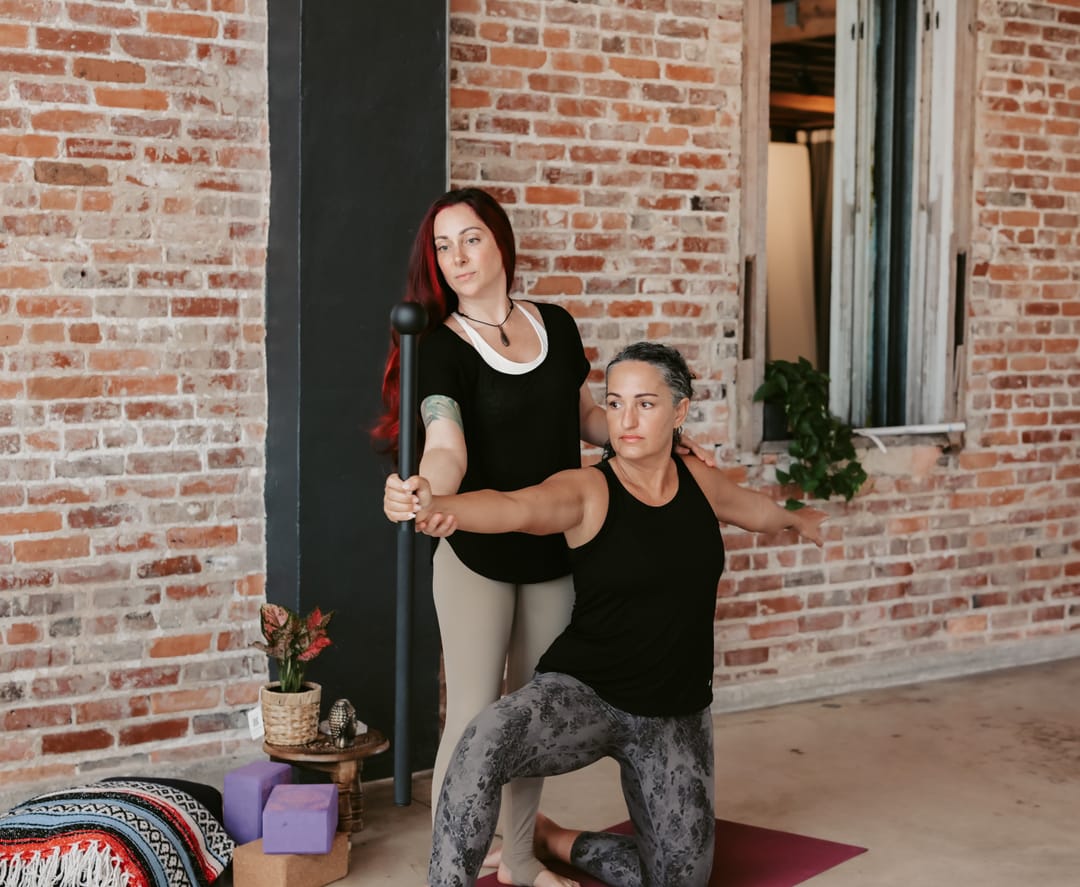
I’m also a movement coach, and I want to see how you move. I’ll watch you squat, reach overhead and walk across the room. Bodies compensate. A hip that doesn’t want to move gets covered by a lower back that moves too much. A stiff upper back turns into a neck that does all the reaching. Those patterns are usually why a massage feels great for three days and then the tension comes back.
From what I see, I pick two or three exercises and teach them with cues you’ll remember. That’s the functional movement part of the session, and you can book a session that’s mostly this if you’d rather. Choose 1:1 Embodiment Coaching and write “functional movement” in the notes, or tell me on a free Clarity Call and I’ll set it up.
This isn’t physical therapy. If you have an injury or a diagnosis, follow your provider’s plan. What I teach can sit alongside it.
A first session, minute by minute
Here’s roughly how a first embodiment coaching session goes.
The first ten minutes are talking. What brought you in, what’s going on, and where you feel it. I’m listening for the body words: tight, heavy, buzzing, numb.
The next ten are breathing. We find a pattern you can hold without effort. Sometimes that’s all we do with the breath. Sometimes it’s where the emotion shows up, and we stay with it for a moment before moving on.
Then about 25 minutes of moving. Slow, small, on a mat or standing. Grounding, some shaking if it helps, the movement screen, and the exercises I want you to keep. None of it is a workout. If you’d rather stay on the mat and breathe, we do that.
The last fifteen are integration. You lie or sit still. We talk about what you noticed, and you pick one practice for the week. You’re fully clothed the whole time. There’s no touch unless we’ve talked about it and you’ve agreed.
1:1, 5-pack or 12-week
You can book a single 60-minute session and see how it feels. Most people start there. If it lands, there’s a 5-pack for a focused run, and a 12-week programme for people who want a weekly rhythm. That one builds from grounding and breath, through somatic release, into functional movement, with practices between sessions.
Current prices for all three are on the pricing page.
How it sits next to massage
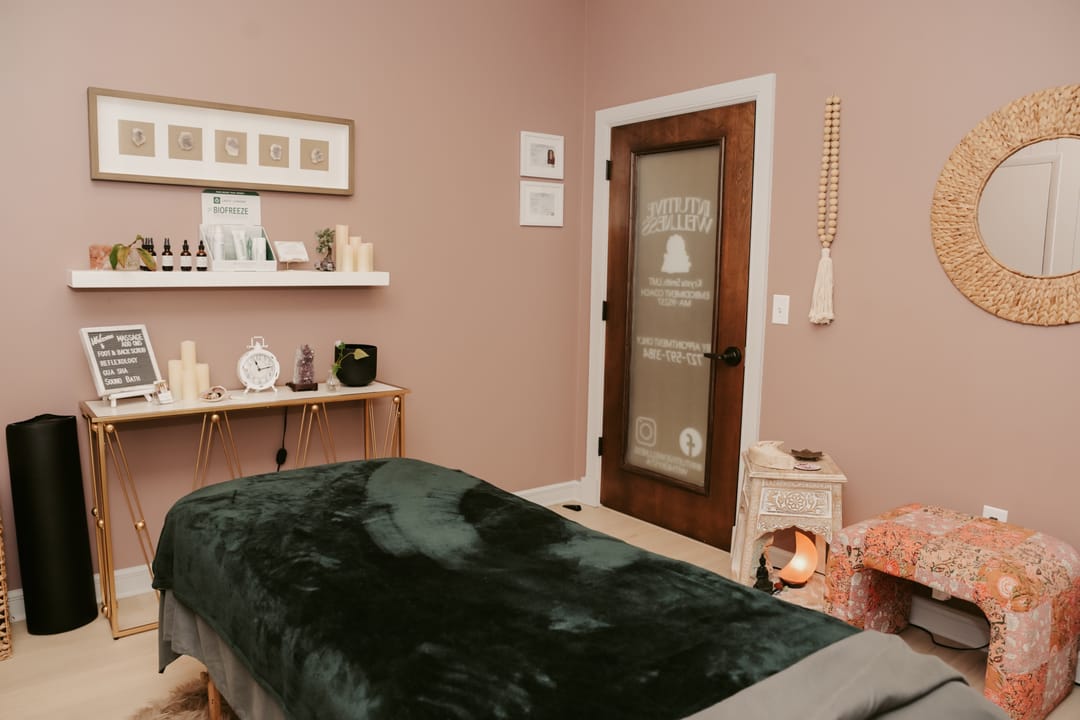
Coaching and massage do different jobs. On the table, I work on what’s tight today. In coaching, you learn to notice what makes it tight and what to do about it. Plenty of clients do both, often Intuitive Massage one week and coaching the next.
And to say it plainly: coaching is not therapy. I’m a licensed massage therapist and a coach, not a licensed mental health professional. Coaching can sit alongside therapy, and for a lot of my clients it does. If what comes up in a session is beyond what I can hold, I’ll tell you and point you to someone who can. If you’re in crisis, contact a licensed mental health provider or call 988.
Questions people ask
Do I need to be fit or flexible?
No. We work with how you move today, and I adjust everything to that. Most of the movement is slow and small.
Is this therapy?
No. I’m a coach and a massage therapist, not a licensed mental health professional. Coaching can sit alongside therapy, and I refer out when something is beyond my scope.
What should I wear?
Clothes you can move in. Sessions happen on a mat and standing, and there’s no table. Bring a notebook if you like to write things down.